
Horse body language · 5 min read
How to read a horse: ears, eyes, tail
Horses communicate a lot through their ears, eyes and posture. A simple guide, with sources, to understanding how the horse next to you feels and staying safe.
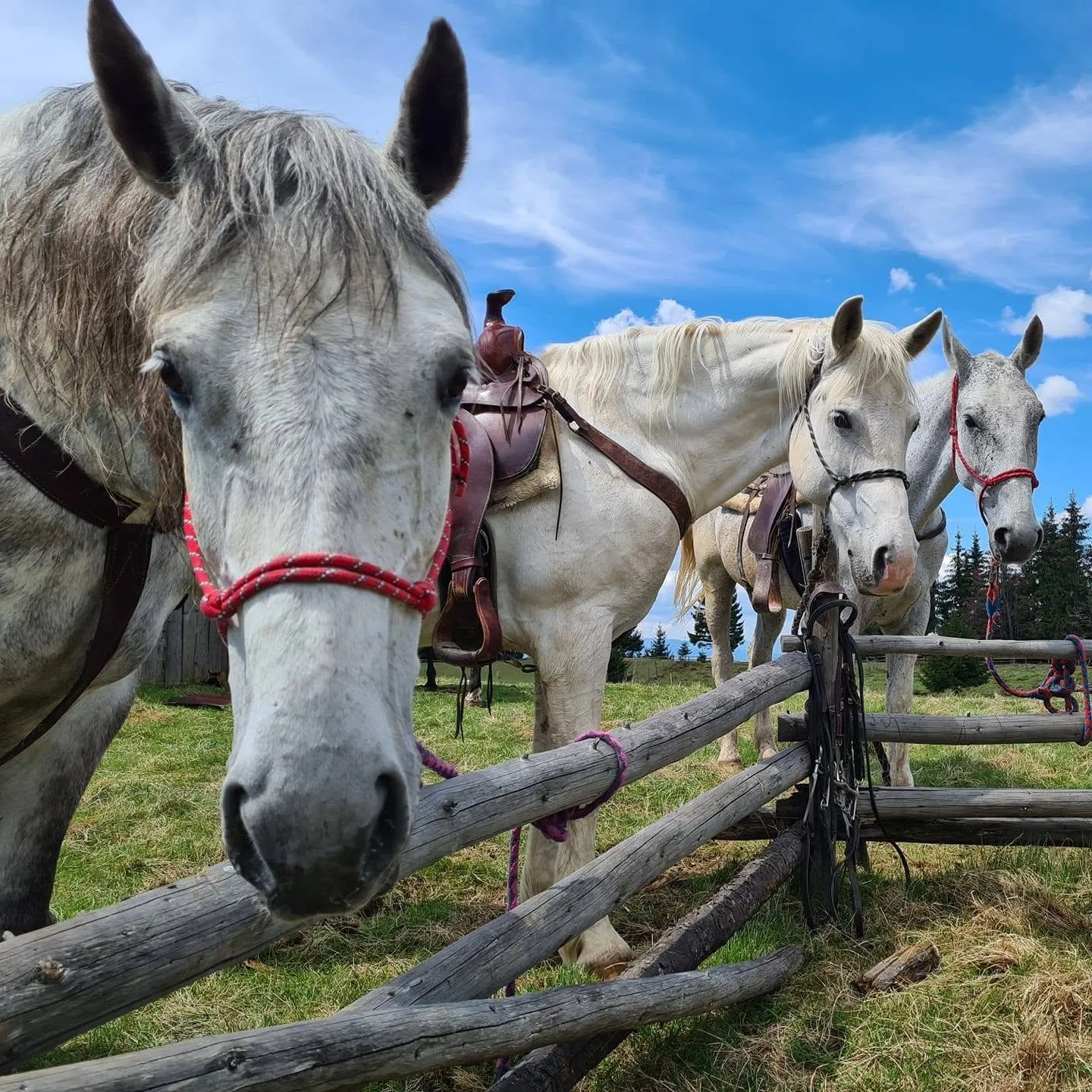
Horses don’t talk, but they communicate all the time: with their ears, their eyes, their tail, their whole body. People who learn to read these signals feel safer around horses and understand them better.
The ears show where the attention is
A horse’s ears can turn almost independently and “point” to where its attention is. This matters between horses, too: in an experiment published in Current Biology (Wathan and McComb, 2014), 72 horses had to choose between two food buckets, based on the direction in which a horse in a photo was looking. They managed it, but not when the eyes or ears of the horse in the photo were covered. For horses, ears are an important part of the conversation.
Here are the basic positions. You can try them on Scarto in the interactive guide:
- Both ears forward: he’s paying attention to something in front of him. If they’re stiff and the nostrils flare, he may be very curious or frightened.
- One ear (or both) slightly back: he’s listening to something behind him. When you’re in the saddle, it’s usually you he’s listening to.
- Soft ears, drooping sideways: he’s usually relaxed, for example while grazing or resting.
- Ears pinned flat back: most of the time he’s upset and giving a warning. Give him space. During intense effort, such as a gallop, it can also mean concentration.
- Ears constantly moving: he’s scanning his surroundings; it can be curiosity, alertness or slight agitation.
The eyes
When a horse is upset, you may see the whites of its eyes, usually together with ears laid back. That’s a clear signal to stop and give it space.
The tail
A tail swishing calmly is, most of the time, simply chasing away flies. A tail lashing the air nervously, especially when there are no flies around, shows an agitated horse and may come before a kick. As with the ears, context matters.
How a horse sees
A horse’s eyes are set on the sides of its head, so it sees almost everything around it: about 350 degrees. It does have blind spots, though: one right in front of and below its nose, and another directly behind it. Hence a few simple rules:
- approach from the front, towards the horse’s shoulder, so it can see you;
- talk to it as you come and before you touch it;
- don’t stand right behind it, and don’t walk under its neck.
Its personal space
Every horse has a “flight zone”, a personal space that, if you enter it too quickly, makes the horse move away. The specialists at Extension Horses explain that this zone shrinks in horses used to people and is larger when you approach straight from the front. That’s why a calm approach towards the shoulder works better.
Read the whole body, not a single sign
No signal tells the whole story on its own. Ears, eyes, tail, neck and posture are read together. And if you’re not sure what you’re seeing, ask your instructor. In time, you’ll start to “hear” what the horse is saying without words.
Sources
- Wathan, J., McComb, K. (2014). The eyes and ears are visual indicators of attention in domestic horses. Current Biology, 24(15), R677–R679.
- Griffin, A. (2019). Horse Body Language. Extension Horses (University of Kentucky).
- Clark, A. (2026). Horse ear positions: what they mean. Your Horse.
- Anderson, K., Comerford, P. (2019). Approaching a Horse. Extension Horses (University of Nebraska, Penn State).
- Bickel, B. (2026). Building from the Ground Up: Safe Ground Handling of Horses. Penn State Extension.
- Equine vision (overview with scientific references). Wikipedia.
Updated on 24 October 2026. This article is for information only and does not replace guidance from your instructor.
Ready for your first ride?
Instructor licensed by the Romanian Equestrian Federation. Trail rides, lessons and carriage rides in Borșa.