
For beginners · 6 min read
Your first riding lesson: what to know before you come
What to wear, how to approach a horse, what happens in the first hour and why your nerves matter. A short guide for beginners, with sources.
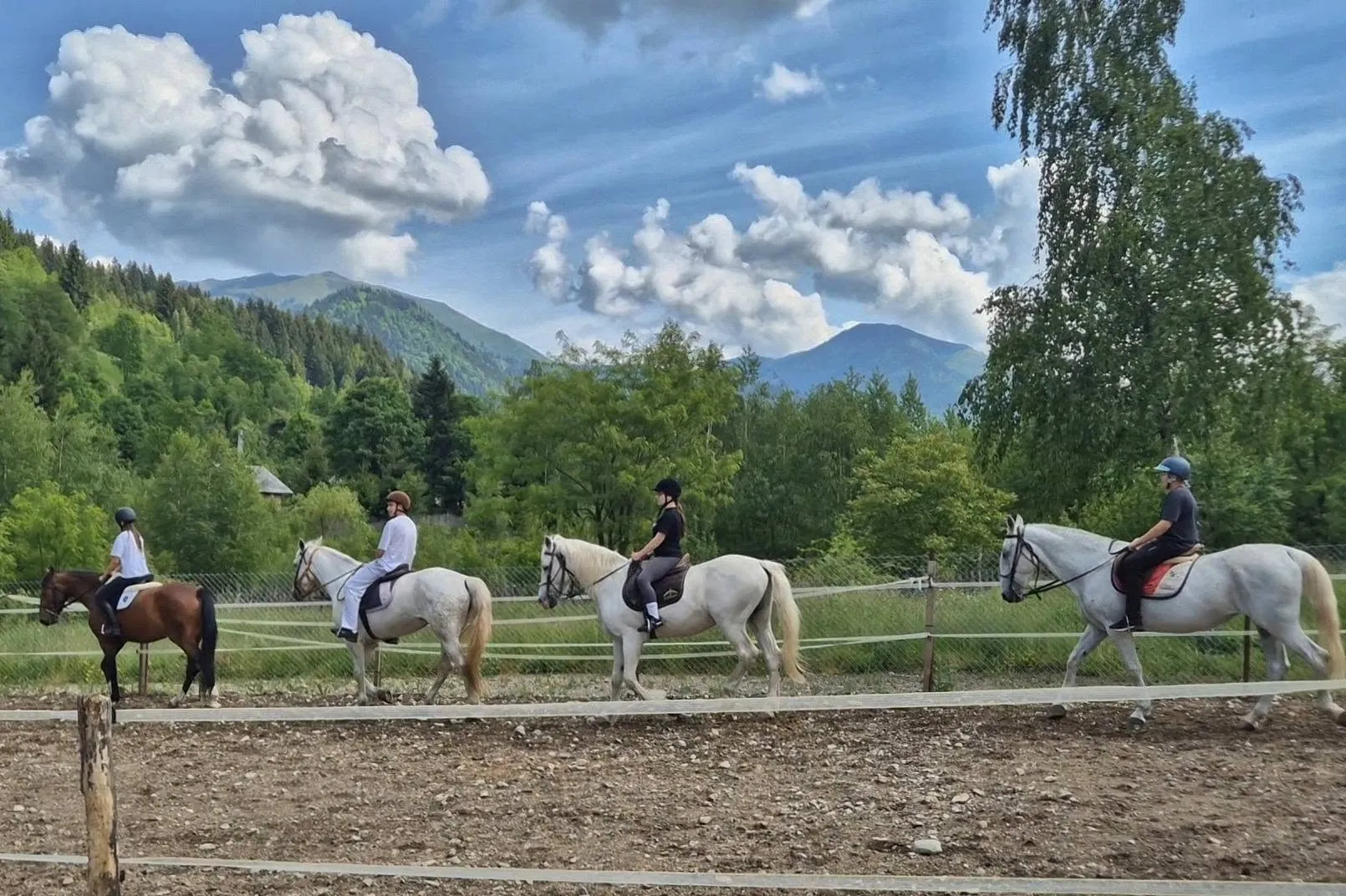
Your first lesson feels a little like the first day of school: nerves, questions and an animal weighing several hundred kilos looking at you with curiosity. The good news is that you don’t need to know anything beforehand. Here’s what will help you arrive feeling relaxed.
Your nerves matter (and it’s fine to have them)
Horses pay close attention to the people around them. In a study published in The Veterinary Journal (Keeling and colleagues, 2009), researchers measured the heart rates of horses and of the people leading or riding them. The people were told that on one of their passes an umbrella would suddenly open. The umbrella never opened, but their heart rates went up, and so did the horses’.
The practical takeaway is simple: you don’t have to feel no nerves at all, just let them settle. Breathe deeply, move calmly and tell your instructor how you feel. A calm horse and a calm person help each other.
What to wear
- Long, comfortable trousers that don’t pinch at the knee. Shorts and skirts are not a good idea, because your skin rubs against the saddle.
- Closed shoes with a firm sole and a small heel. The heel stops your foot from slipping through the stirrup. Avoid sandals, flip-flops and trainers with very thick, wide soles.
- Layers. In the mountains the weather changes quickly: a T-shirt, something warm on top and, if needed, a light rain jacket.
- Nothing that dangles: long scarves, large earrings, bags that swing around.
- A riding helmet. It is the most important piece of equipment. If you have one, check that it is certified for riding (for example to the European standard EN 1384). A bicycle helmet is not designed for falls from a horse. If you don’t have a helmet, let us know when you write to us.
How to approach a horse
A horse sees almost everything around it, but it has blind spots: right in front of its nose and directly behind it. That’s why the specialists at Penn State Extension recommend approaching from the front, towards the horse’s shoulder, at a walk and talking to it. That way it sees and hears you in good time.
A few rules you’ll hear at any good lesson:
- don’t stand right behind the horse, or right in front of it;
- don’t walk under its neck, because it can’t see you there;
- don’t run or shout around horses;
- let it know before you touch it: with your voice and a hand placed calmly on its neck or shoulder.
What happens in the first hour
Every instructor has their own rhythm, but a first lesson usually looks something like this:
- Getting to know the horse. You stroke it and find out its name and what it likes.
- The briefing. How to hold the reins, how to sit in the saddle, how to ask the horse to move off, turn and stop.
- Mounting. Traditionally you mount from the horse’s left side, and most horses are used to it. The instructor or a mounting block helps you.
- Your first steps at a walk, in the arena, with the instructor close by.
- Dismounting and saying thank you. The horse has worked too. A pat on the neck is the best “thank you”.
After the lesson
It’s normal to feel muscles the next day that you didn’t know you had, especially on the inside of your thighs and in your back. Riding is real exercise: a report produced for the British Horse Society by the University of Brighton showed that riding and the activities around horses reach the intensity of moderate physical exercise.
In short
Come well rested, dressed comfortably and ready to listen. We’ll learn the rest together, at a walk.
Sources
- Keeling, L.J., Jonare, L., Lanneborn, L. (2009). Investigating horse–human interactions: The effect of a nervous human. The Veterinary Journal, 181(1), 70–71.
- Bickel, B. (2026). Building from the Ground Up: Safe Ground Handling of Horses. Penn State Extension.
- Anderson, K., Comerford, P. (2019). Approaching a Horse. Extension Horses (University of Nebraska, Penn State).
- The British Horse Society (2026). Hat guide: accepted standards for riding helmets.
- The British Horse Society, University of Brighton (2011). The health benefits of horse riding in the UK.
Updated on 24 October 2026. This article is for information only and does not replace guidance from your instructor.
Ready for your first ride?
Instructor licensed by the Romanian Equestrian Federation. Trail rides, lessons and carriage rides in Borșa.